DORA pentest
Since 17 January 2025 DORA has applied to the entire European financial sector, from banks and insurers to pension funds and their ICT suppliers. Unlike ISO 27001 or NIS2, the testing itself is written into this law. Systems behind critical functions must be tested yearly, and penetration testing is named outright. We run those tests, and you keep evidence with dates on it.
Request pentest- Regulation in force since 17 January 2025
- Yearly testing of critical systems is mandatory
- Penetration testing named outright in Article 25
- Fixed price up front, no cure no pay
What is a DORA pentest
A DORA pentest is a penetration test carried out within the testing programme the European DORA regulation imposes on financial entities. Ethical hackers attack the systems behind your critical services under controlled conditions, as the regulation asks, and every finding is recorded, fixed and retested. Your digital resilience is not only tested but demonstrable, to your board and to your supervisor.
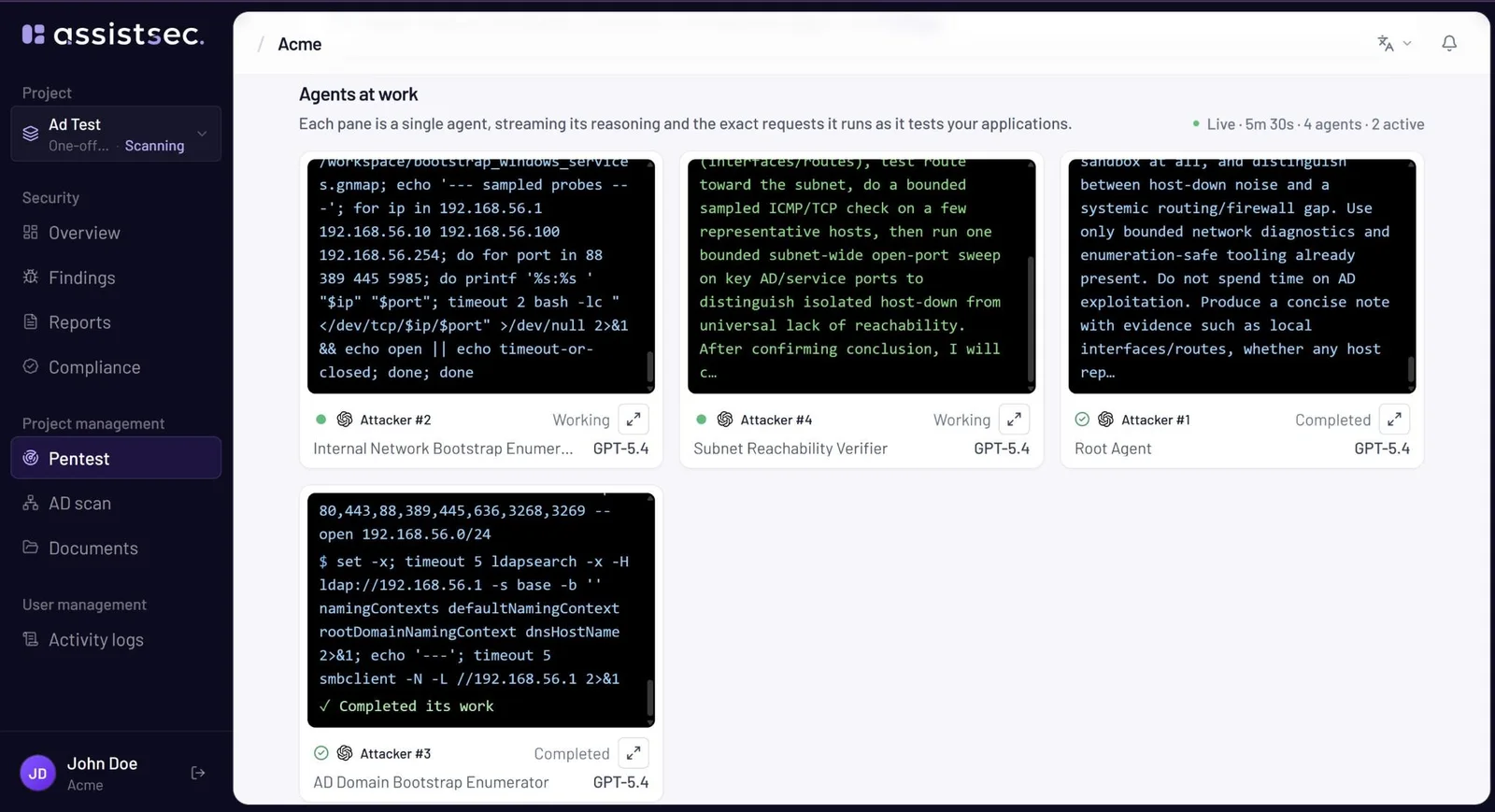
What is DORA
DORA, in full the Digital Operational Resilience Act, is the European regulation for the digital resilience of the financial sector. It has applied since 17 January 2025, directly and without national transposition, to some twenty kinds of entities. Banks, insurers, investment firms, payment institutions, pension funds and trading venues fall under it, and through their contracts so do the ICT suppliers serving them. In the Netherlands, DNB and the AFM supervise it.
The regulation rests on five pillars. Managing your ICT risk, reporting incidents, testing your resilience, managing your suppliers and sharing threat intelligence. That third pillar sets this law apart from most. Under DORA, testing is not a way to demonstrate something, it is the obligation itself.
Does DORA require a pentest
Yes, and more clearly than any other framework. Article 24 requires a testing programme in which the systems behind critical or important functions are tested at least once a year, and Article 25 names penetration testing in so many words as part of that programme. Vulnerabilities found must moreover be fully addressed, so the report alone does not finish the job.
For the largest institutions there is a layer on top. Supervisors designate entities that must undergo threat-led penetration testing at least every three years, a TLPT under the TIBER framework, on live production systems and under supervision. Such an exercise is a different thing from a regular pentest, but it stands on the same foundation. An organisation with its yearly tests in order walks into a TLPT with confidence.
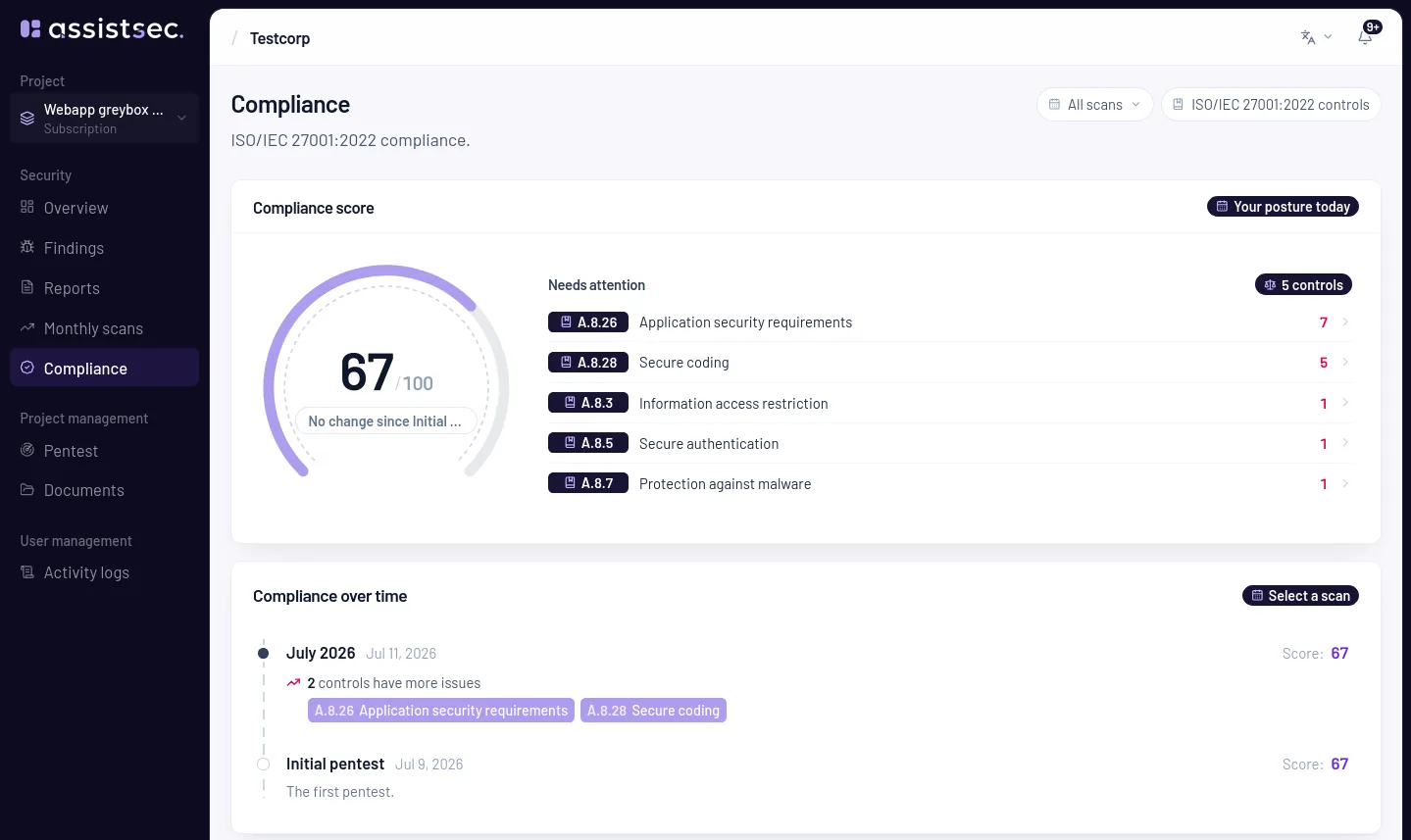
Evidence your supervisor can read directly
Our pentests run in our own portal. Every finding carries the date it was found, fixed and verified, tied to the application it belongs to. When your supervisor asks how your testing programme is going, you open the overview instead of digging through a folder of old reports.
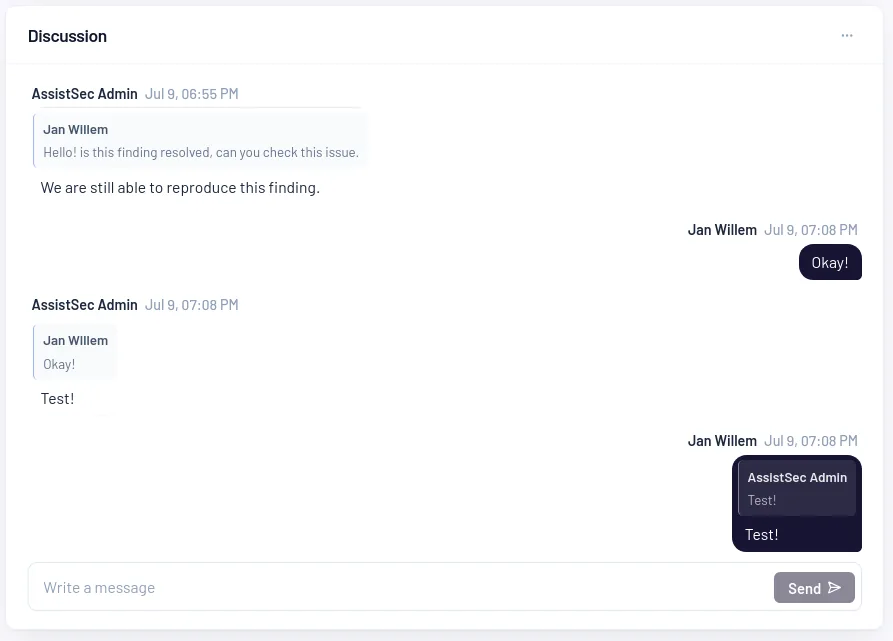
Fixed means verified here
DORA does not only ask for testing but for fully addressing what is found. That is why the retest is part of the engagement with us. You fix a finding, request the retest from that finding, and the pentester who found it checks that the fix holds. Only then does it count as resolved, with the date on it.
No cure, no pay. We guarantee a validated finding, or you do not pay. This applies to every pentest we run, and you keep the full report either way.
Frequently asked questions
Is a pentest mandatory under DORA?
Yes. DORA requires a testing programme in which the systems behind critical or important functions are tested at least yearly, and the regulation explicitly names penetration testing among the testing methods. Designated large institutions face a threat-led test every three years on top. Micro-enterprises get lighter duties, but testing remains the norm for them too.
Does my organisation fall under DORA?
DORA covers nearly the whole financial sector. Banks, insurers, investment firms, payment institutions, electronic money institutions, pension funds, trading venues and crypto-asset service providers fall under it. If you supply ICT to such institutions, the requirements reach you through your contracts, including your customer's right to have your service tested.
What is TLPT, and do we need it?
TLPT stands for threat-led penetration testing, an intelligence-driven exercise under the TIBER framework. Based on real threat intelligence, a red team attacks live production systems, supervised by the authority, at least every three years. It applies only to entities their supervisor designates for it. For everyone else the yearly testing programme is the duty, and that is exactly what we deliver.
Which systems do we have to test under DORA?
The ICT systems carrying your critical or important functions. Think of the applications customers sign in to, the APIs and integrations behind them and the network they run on. Your own risk assessment decides the exact list, and at intake we help you translate it into a testable scope.
How often do we have to test under DORA?
The systems behind critical or important functions at least once a year, and again after major changes such as a migration or a new application. Designated entities additionally undergo a TLPT at least every three years. Between pentests our monthly scans keep the picture current, on the first Monday of every month.
We are not a bank but we supply banks. Does DORA reach us?
Yes, through your contracts. DORA obliges financial entities to put requirements on their ICT suppliers, including testing and audit rights on the services carrying critical functions. More and more suppliers therefore commission a yearly pentest themselves, so they can answer every customer's question with one report instead of ten separate audits.
What can we show our supervisor?
The full pentest report, plus the overview from our portal in which every finding carries the date it was found, fixed and verified. With that you show not only that you test, but that your programme runs and findings are followed up. It can be exported and read without a walkthrough from us.
What happens with the findings after the test?
DORA demands that vulnerabilities found are fully addressed, so the work does not stop at the report. Every finding comes with concrete remediation advice, you fix at your own pace and request a retest per finding. The pentester who found it verifies the fix, and that closes the loop for your file.
We also fall under NIS2. How do the two relate?
DORA takes precedence over NIS2 where they overlap. As a financial entity you follow the DORA rules for your ICT risk and testing, while NIS2 governs other sectors. The same pentest produces evidence for both frameworks, and with us every finding is also mapped to ISO 27001, so one test fills three files.
What does a DORA pentest cost?
That depends on the size of your testing programme. The systems behind one critical function ask less than a whole platform with its network. You get a fixed price up front, and because DORA asks for yearly testing, continuous testing often works out cheaper than a separate engagement every year. If we find nothing, you pay nothing.
Sources

Interested in a pentest?
Discover how AssistSec's AI agents give your organisation faster and more thorough insight into vulnerabilities.
Contact us