ISO 27001: what is it and what does it cost?
ISO 27001 is the standard for information security. Learn what it contains, how certification works, what it costs and how it relates to NIS2.
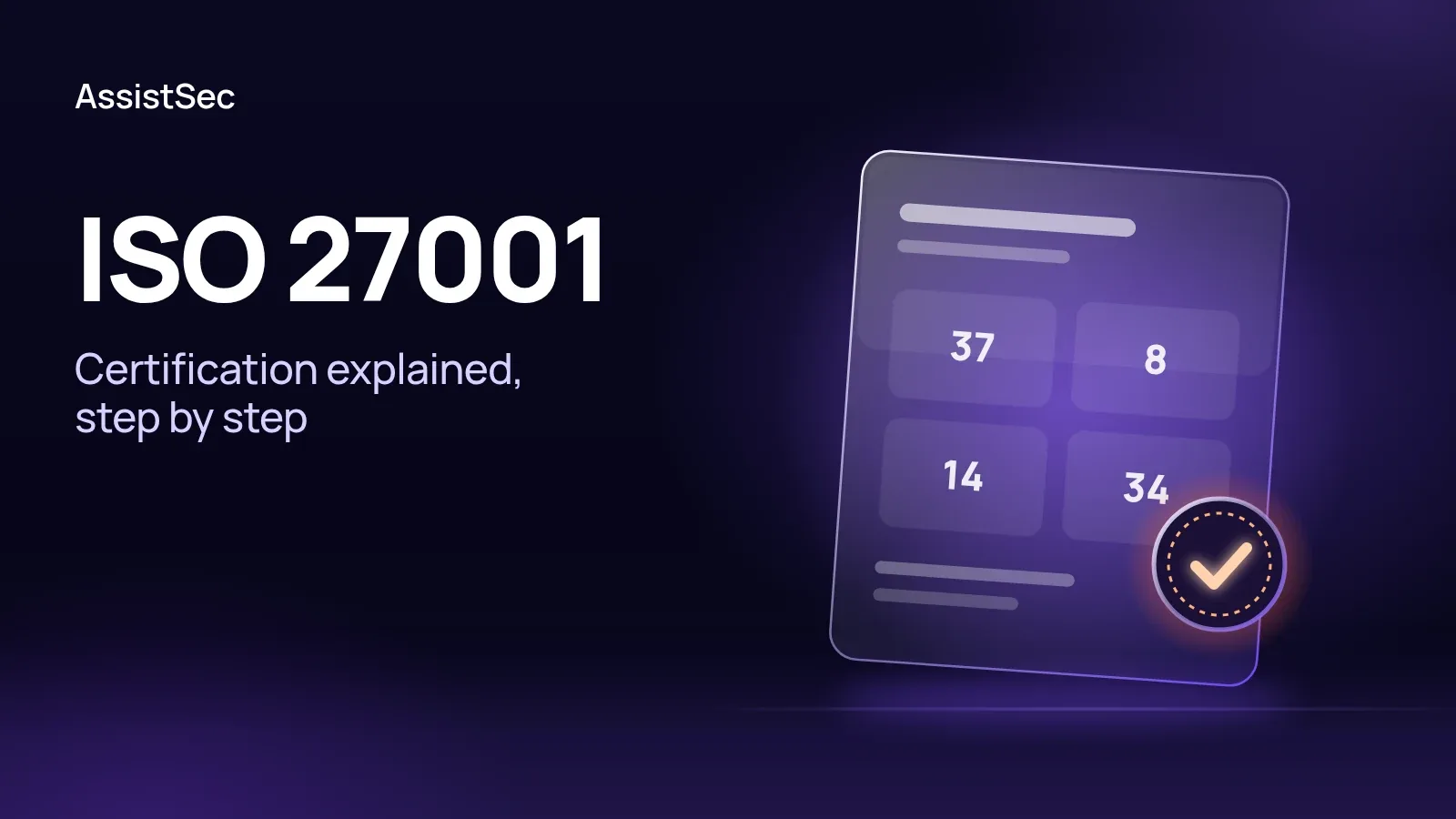
ISO 27001 is the international standard for information security. An ISO 27001 certificate shows that you manage the security of your information in a demonstrable and structured way. Customers, tenders and regulators increasingly ask for it.
In short
What: a standard for an information security management system (ISMS), with 93 controls in Annex A.
Version: ISO/IEC 27001:2022. Certificates under the old 2013 version have no longer been valid since 31 October 2025.
Certification: through an accredited certification body, in two audits. The certificate is valid for three years, with a surveillance audit every year.
Costs: mainly depend on your size, your starting point and how much you outsource.
NIS2: ISO 27001 is not mandatory, but it covers much of the duty of care under the Dutch Cybersecurity Act.
Below you can read what it contains, how the process works and how to get started.
What is ISO 27001?
ISO 27001 (in full: ISO/IEC 27001) is an international standard that describes how to set up, maintain and improve a management system for information security. Such a system is called an ISMS. Its goal is to protect the confidentiality, integrity and availability of your information.
At its core is risk management. You determine which risks apply to your organisation and choose suitable measures for them. So ISO 27001 does not prescribe a fixed list of technical settings, but a way of working that you improve every year.
What is the difference between ISO 27001 and ISO 27002?
ISO 27001 contains the requirements you must meet to get certified. ISO 27002 is guidance, with explanations and examples for each control. You can only be certified against ISO 27001.
Related standards: in Dutch healthcare, NEN 7510 applies, which is based on ISO 27001, and Dutch government organisations work with the Baseline Informatiebeveiliging Overheid (BIO).
What does ISO 27001 contain?
The standard has two parts: the requirements for your management system (clauses 4 to 10) and a list of controls (Annex A).
The requirements: clauses 4 to 10
| Clause | What it covers |
|---|---|
| 4. Context | What falls within your ISMS (the scope), and who are the interested parties? |
| 5. Leadership | Management is involved and sets a security policy |
| 6. Planning | Assessing risks, choosing controls and setting objectives |
| 7. Support | People, resources, competence, awareness and documentation |
| 8. Operation | Actually implementing your controls and managing your risks |
| 9. Performance evaluation | Measuring, internal audits and an annual management review |
| 10. Improvement | Fixing nonconformities and continually improving the system |
The controls: Annex A
Annex A contains 93 controls in four themes:
| Theme | Number | Examples |
|---|---|---|
| Organisational | 37 | Policies, suppliers, incident management, business continuity |
| People | 8 | Screening, awareness, remote working |
| Physical | 14 | Access to buildings, protection of equipment |
| Technological | 34 | Access control, vulnerability management, backups, logging, secure development |
You don't have to apply all 93 controls. In a Statement of Applicability you record, for each control, whether you apply it and why or why not.
How does ISO 27001 certification work?
You get a certificate from an accredited certification body. In the Netherlands, these bodies are accredited by the Raad voor Accreditatie (RvA). The process looks like this:
Define the scope. Which departments, locations, systems and processes fall under your ISMS?
Gap analysis. Where do you stand against the standard, and what is still missing?
Set up the ISMS. Security policy, risk assessment, risk treatment plan and the Statement of Applicability.
Implement the controls. And collect evidence that they work. Your ISMS needs to run for a while before the auditor comes.
Internal audit and management review. You first check for yourself that everything works.
Stage 1 audit. The auditor reviews your documentation and whether you are ready.
Stage 2 audit. The auditor checks whether your ISMS works in practice. If it does, you receive the certificate.
The certificate is valid for three years. In the years in between there is an annual surveillance audit, and after three years a recertification.
How long the process takes depends mainly on your starting point. If much is already in place, it goes faster; if you start from scratch, think in months rather than weeks.
How much does ISO 27001 certification cost?
The costs consist of three parts:
| Cost item | What it depends on |
|---|---|
| Audits | The certification body charges per audit day. The number of days depends mainly on the number of employees within your scope (following the international guideline IAF MD 5). |
| Preparation | Your own hours, or an external consultant who helps set up the ISMS. |
| Controls | What you still need to implement: for example MFA, logging, backups, training or a pentest. |
On top of that come annual costs for surveillance audits, internal audits and maintaining your ISMS.
How to keep costs under control:
Start with a gap analysis, so you only work on what is really missing.
Choose a logical scope. Too broad costs more than necessary; too narrow gives you a certificate customers get little value from.
Request quotes from at least two accredited bodies and compare the number of audit days.
ISO 27001, NIS2 and pentesting: how do they fit together?
ISO 27001 and the Dutch Cybersecurity Act (NIS2)
Since 15 August 2026, the Dutch Cybersecurity Act (NIS2) has applied. ISO 27001 is not mandatory under it, but it overlaps strongly with the duty of care: risk analysis, incident management, continuity, suppliers and vulnerability management.
Note: an ISO 27001 certificate does not automatically mean you comply with the Act. The law also has a reporting duty (within 24 hours), a registration duty with the NCSC and a training duty for board members. You need to arrange those separately.
ISO 27001 and pentesting
The word "pentest" does not appear in the standard. But several Annex A controls do require you to know your vulnerabilities and test your security:
8.8 Management of technical vulnerabilities: knowing which weaknesses you have and fixing them.
8.29 Security testing in development and acceptance: testing software before it goes live.
5.35 Independent review of information security: having your security assessed by someone from outside.
A recent pentest report with a retest is strong evidence for an auditor. Want to keep that evidence up to date all year? Read how continuous compliance with ISO 27001 mapping works.
ISO 27001 checklist: are you ready for the audit?
Go through this list before inviting the certification body:
The scope of your ISMS is defined and approved by management.
An information security policy has been adopted.
You have carried out a risk assessment and drawn up a risk treatment plan.
The Statement of Applicability is complete.
Roles and responsibilities for information security are assigned.
Employees have completed awareness training.
Your key suppliers have been assessed.
Your systems have been tested for vulnerabilities, and what you found has been fixed.
There is an incident procedure, and it has been rehearsed at least once.
Your backups have been tested by actually restoring them.
You have carried out an internal audit.
Management has reviewed the ISMS.
Frequently asked questions about ISO 27001
Is ISO 27001 mandatory?
No, not by law. But customers and tenders increasingly ask for it. Dutch government organisations follow the BIO, and Dutch healthcare asks for NEN 7510, which is based on ISO 27001.
How long is an ISO 27001 certificate valid?
Three years. During that period there is a surveillance audit every year, and a recertification after three years.
What is the difference between ISO 27001:2013 and ISO 27001:2022?
In the 2022 version the controls were reorganised: 93 controls in four themes instead of 114 in fourteen domains. New controls were added, such as threat intelligence, security for cloud services and data leakage prevention. Since 31 October 2025, only the 2022 version applies.
What is an ISMS?
An ISMS (Information Security Management System) is the set of policies, processes and controls you use to manage information security in a structured way and keep improving it. ISO 27001 describes the requirements for such a system.
Can a small company get ISO 27001 certified?
Yes. The standard scales with your size: a smaller organisation needs fewer audit days and a simpler ISMS. What matters is that your controls match your real risks.
What is a Statement of Applicability?
A document in which you record, for each Annex A control, whether you apply it and why or why not. The auditor uses it as a guide.
Evidence for your auditor, without the hassle
AssistSec delivers a key part of the technical evidence an ISO 27001 auditor wants to see. Our pentesters (OSCP, OSWE) test your applications and APIs, and you get a report with a retest that maps to controls 8.8, 8.29 and 5.35. With ARGUS you keep that evidence up to date all year.
More from the blog
View all blogs- News
AI Pentesting: Why organisations choose assistsec
Discover why more companies are choosing AI pentesting with AssistSec. We combine autonomous AI agents with the expertise of senior penetration testers to deliver comprehensive AI-powered penetration tests.
Nov 21, 2026 - Inside AssistSec
What is a pentest? Types, process and costs
A pentest is a controlled hacking attempt on your own systems. Learn which types exist, how it works, what it costs and what to look for.
Nov 2, 2026 - Inside AssistSec
Ethical hacker: what does an ethical hacker do?
An ethical hacker breaks in with permission to find security holes. Learn what they do, whether it is legal and how to hire one.
Nov 2, 2026


Interested in a pentest?
Discover how AssistSec's AI agents give your organisation faster and more thorough insight into vulnerabilities.
Contact us